Nick Offerman spent the 2025 Oscars doing a job most viewers barely notice—until he makes a line land so hard it ripples through the room. Serving as the in-house announcer for the 97th Academy Awards at the Dolby Theatre, Offerman delivered a series of pre-show reminders meant to keep the ceremony moving. One of them, aimed at nominees and winners, turned into the night’s most wince-and-laugh quote: “Once they announce your name, get to the stage as quickly and safely as you can. The longer that you take sharing hugs, whether consensual or with Kevin Spacey, the less amount of time you’ll have.”
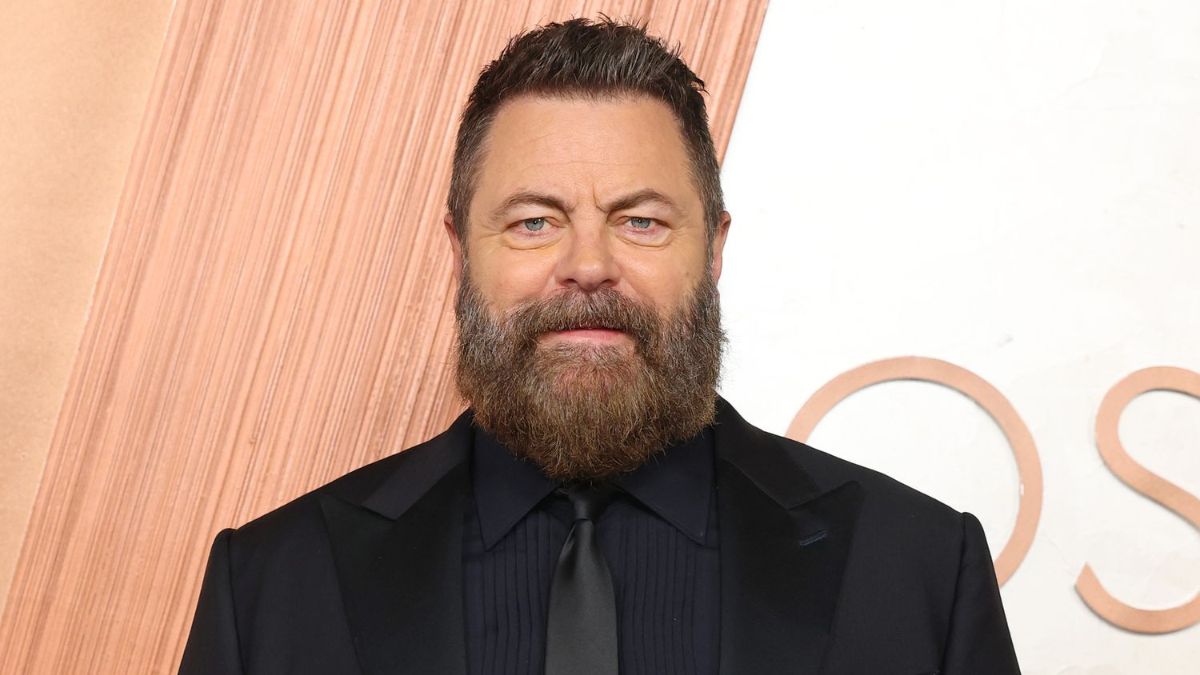
The jab drew the kind of mixed reaction you’d expect audible laughs paired with groans because it wasn’t just an “hurry up” gag. Offerman’s punchline deliberately threaded the Oscars’ long-running pacing obsession (short speeches, minimal wandering, fewer extended thank-yous) with a pointed reference to Spacey’s history of sexual misconduct allegations.
Offerman’s line also fit the overall tone of his announcements: sharp, slightly abrasive, and intentionally disruptive. Reports from inside-the-room coverage described him tossing out other snarky instructions, like discouraging certain types of thank-yous and stacking jokes that sounded like mock “rules” for the night. The Los Angeles Times’ live coverage noted Offerman making multiple preshow quips (including political satire and celebrity digs), with the Spacey line getting one of the biggest reactions.
If you’re wondering why Spacey’s name still functions as a cultural tripwire, it’s because the public record is messy and sprawling. Spacey has faced numerous allegations since 2017 and multiple legal proceedings. In the UK, he was acquitted in 2023 of nine sexual offence charges after a London trial. In the U.S., he was found not liable in a civil case brought by actor Anthony Rapp in 2022. Those verdicts exist alongside the broader set of allegations and the professional fallout that followed, so when Offerman framed “consensual” hugging versus “hugging with Kevin Spacey,” he was clearly aiming at the accusation-shaped reputation rather than a specific case outcome.
That’s also why the joke landed as “controversial” even to people who laughed. It drags a real-world, heavy subject, consent and sexual misconduct, into a room that’s traditionally built to celebrate film, not litigate cultural scandals on mic. And it puts Spacey’s name in the middle of an instruction to winners, implying an uncomfortable subtext: don’t linger on physical contact, because not all physical contact is safe or welcome.
Offerman didn’t appear at the microphone for a long stand-up set; his power that night was in the offstage authority voice, the guy who sounds like he’s reading “house rules” but slips in punches when you least expect them. That persona played well with the ceremony’s host dynamic, too. Coverage of the broadcast highlighted Offerman taking playful shots at host Conan O’Brien from his announcer position, leaning into the bit that Conan was under pressure and Offerman was the deadpan commentator in the shadows.
Whether you found the Spacey line funny or gross probably depends on your tolerance for “shock” humor at a formal event and whether you think the Oscars should ever use a platform like that to reference sexual misconduct allegations as a punchline. But it undeniably did what these moments are designed to do: it cut through the noise, got people reacting in real time, and generated the next-day headlines that keep the Oscars conversation alive long after the final award is handed out.