For years, “Where are the X-Men?” was the quiet elephant in the Marvel Cinematic Universe. The MCU became a global juggernaut without its most famous mutant team—not because Marvel didn’t want them, but because it couldn’t legally use them in the first place. That reality is finally shifting in a meaningful way: Avengers: Doomsday is positioned as a major on-screen bridge between Marvel Studios’ MCU and the legacy Fox-era X-Men cast, setting up a bigger “mutant era” that Marvel boss Kevin Feige has openly framed as part of what comes after Avengers: Secret Wars.
The original roadblock was business, not storytelling. In the 1990s, a financially struggling Marvel licensed film rights to key characters—including the X-Men—to 20th Century Fox. That’s why Fox could build a full X-Men film franchise while Marvel Studios, once it launched the MCU with Iron Man in 2008, had to craft its universe around characters it fully controlled. It’s also why early MCU “team-up” logic never included Wolverine, Storm, or Magneto: Marvel couldn’t put them on screen without Fox.
Everything changed when Disney bought Fox’s entertainment assets. The acquisition became effective on March 20, 2019, a corporate earthquake that pulled a massive library—plus the X-Men film rights—under Disney’s umbrella. That deal didn’t instantly place mutants into the MCU, but it finally made it possible for Marvel Studios to do it on its own terms, without legal gymnastics.
Marvel didn’t rush an “MCU X-Men movie” the moment the ink dried—and that wasn’t hesitation so much as strategy. The MCU already had a long-running continuity with Avengers-level stakes, and dumping in an entire mutant ecosystem overnight would have been messy. Instead, Marvel used its post-Endgame storytelling tool—the multiverse—as the cleanest bridge: bring recognizable mutant faces in from parallel worlds first, then rebuild the concept more permanently later. Entertainment Weekly has described Doomsday as the point where that plan becomes undeniable on-screen.
If you trace the breadcrumbs, the “mutants are coming” build has been slow but deliberate. One of the loudest early winks was Doctor Strange in the Multiverse of Madness, which used an alternate-universe Illuminati sequence to feature Patrick Stewart—synonymous with Fox’s Professor X—in a way that signaled Marvel was comfortable leveraging legacy casting as a multiverse device. Then came Ms. Marvel, whose finale explicitly used the word “mutation” in a scene that many major outlets treated as the MCU’s first direct mutant breadcrumb for Kamala Khan. Black Panther: Wakanda Forever went further by straight-up identifying Namor as a “mutant,” moving the MCU from teasing the concept to actually saying it out loud in canon dialogue.
Marvel also started inching closer to the Fox sandbox with cameos that felt less like jokes and more like infrastructure. The Marvels post-credits scene brought back Kelsey Grammer as Beast—an unmistakable Fox-era casting pull—fueling the idea that Marvel was intentionally “warming up” audiences to familiar X-Men faces before the bigger crossover moment.
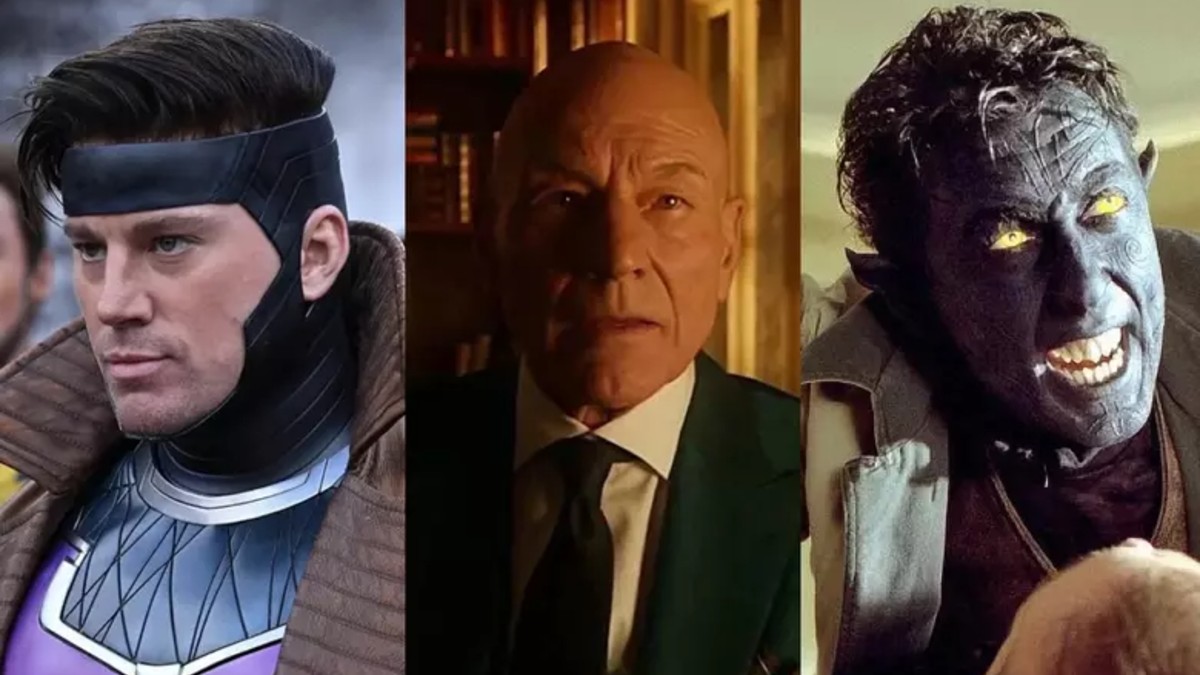
That bigger moment was made official in March 2025 when Avengers: Doomsday casting news confirmed multiple “OG” X-Men actors from the Fox franchise as part of the film’s lineup (including Patrick Stewart and Ian McKellen, among others). Deadline’s reporting made it clear this wasn’t a vague rumor mill—it was a real, intentional bridge between universes that Marvel is now willing to put front and center in its tentpole Avengers storytelling.
Behind the scenes, Marvel has been building the next step too: the true MCU-native X-Men. In May 2024, reporting indicated Marvel was moving forward with an X-Men feature script, with Michael Lesslie attached as writer. Then in 2025, major trades reported Jake Schreier was in talks to direct, signaling the project is shifting from “eventual idea” to “actual pipeline.”
The clearest statement of intent, though, came from Feige himself. In July 2025, he described Secret Wars as a kind of “reset,” and confirmed that Marvel plans to recast the X-Men (and eventually other cornerstone roles) after that film—careful about the word “reboot,” but not about the direction. The message is blunt: legacy actors can help Marvel transition into mutants, but Marvel Studios ultimately wants a new long-term X-Men roster that can anchor the franchise for years.
Put it all together and the “long road” starts to look less like indecision and more like sequencing. Step one: regain the rights (2019). Step two: establish multiverse rules and test legacy crossovers via selective cameos. Step three: pay it off in an Avengers-scale collision (Doomsday and Secret Wars). Step four: launch a recast, MCU-first mutant era that doesn’t need multiverse training wheels anymore.
That’s the real X-factor here: Marvel isn’t just “adding the X-Men.” It’s using them as a lever to transition the MCU into its next phase—one where mutants aren’t special guests from another timeline, but a foundational pillar of the universe. And after a rights mess that began decades ago, Marvel is finally close to telling X-Men stories the way it always wanted to: inside its own cinematic sandbox, on its own schedule, with a plan that extends years into the future.