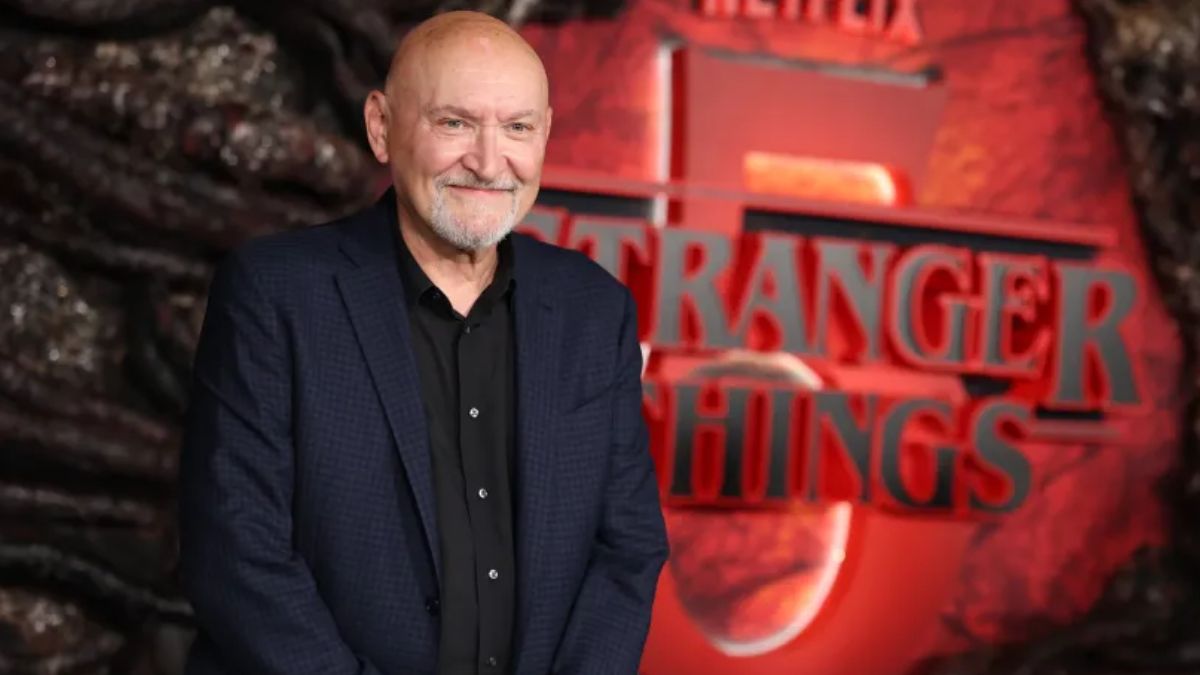
Frank Darabont’s return to directing for Stranger Things 5 came with a high-pressure assignment: make a key Episode 5 sequence feel brutal, clear, and emotionally legible, even as the story crosscuts multiple locations at once.
In that scene, Will Byers taps into Vecna’s mind and, for the first time, is able to physically hurt him, a turning point that changes Will from “connected victim” to active weapon.
The scene that flips Will’s role in the final season
The moment Darabont is asked about is in Episode 5 (“Shock Jock”), when Will reaches Vecna through the psychic connection and is able to harm him. Tudum describes it as a major reveal: Will can physically hurt Vecna.
Recaps of the episode frame the practical stakes the same way: the group’s plan is built around reconnecting Will to the hive mind, and when Vecna moves to kill Max, Will intervenes through that link and stops him.
Darabont’s method was simple and very old-school: strip it down to beats
Darabont says the challenge was the complexity, with events happening across different locations, while Will’s performance had to track each shift cleanly. His solution was to isolate Will’s pages and map the sequence as a set of ordered “beats,” then feed those beats to Noah Schnapp in real time while the camera rolled.
Instead of leaving Schnapp to “feel it out” across fragmented setups, Darabont stayed off-camera and called out exactly what Will should be reacting to, moment by moment, so the emotional progression would stay consistent even if the shoot did not happen in a perfectly linear way.
Why does that matter for a scene like this
A psychic-attack scene can get messy fast because it has two jobs at once:
-
It has to communicate the mechanics clearly (what Will is doing, and what it does to Vecna).
-
It has to land as character work (Will choosing to fight back, not just suffering through another connection).
Darabont’s beat-by-beat cueing is basically a control system for that. It keeps the performance readable, and it gives the editors clean stepping stones when they cut between Will, Vecna, and whatever is unfolding elsewhere.
What Darabont said about Noah Schnapp’s performance
Darabont is openly impressed with Schnapp here, emphasizing how intense the performance became once the cameras were rolling and calling him fearless in the moment.
That detail is important because it explains why the sequence works even if you strip away the supernatural packaging. The “brutal” part is not just the idea that Vecna gets hurt. It’s watching Will push through terror, then seize control.
The attack is also a craft problem, not just an acting problem
Tudum’s interview makes clear Darabont’s Episode 5 workload was stacked: Will’s Vecna-harm reveal, action sequences, and effects-heavy Demogorgon work all in the same stretch.
That context helps explain why he talks so much about preplanning, coordination, and making sure each piece is captured in a way that the effects and editorial teams can finish later.
And outside of Tudum, other coverage also positions “Shock Jock” as one of the darker, scarier episodes of the season, which tracks with how relentlessly the episode pressures the characters.
The bigger point: Darabont filmed “brutal” by prioritizing clarity
What Darabont describes is not a gimmick or a secret technique. It’s disciplined direction: reduce a complicated supernatural sequence to a clear chain of cause and effect, then guide the actor through it with precision so the audience never loses the thread.
That’s why Will’s Vecna attack lands the way it does. It feels brutal because it’s controlled, not chaotic.