Joyce Byers has never been the flashiest fighter in Stranger Things. She is the person who believes you when you sound crazy, keeps moving when everyone else freezes, and treats “protect my family” like a mission statement.
So when the series finale comes down to a final, irreversible moment against Vecna, the show hands it to Joyce, ax in hand, and lets Winona Ryder land the finishing blow. The Duffer Brothers say it was not a random cool shot. It was the most honest ending the series could give her.
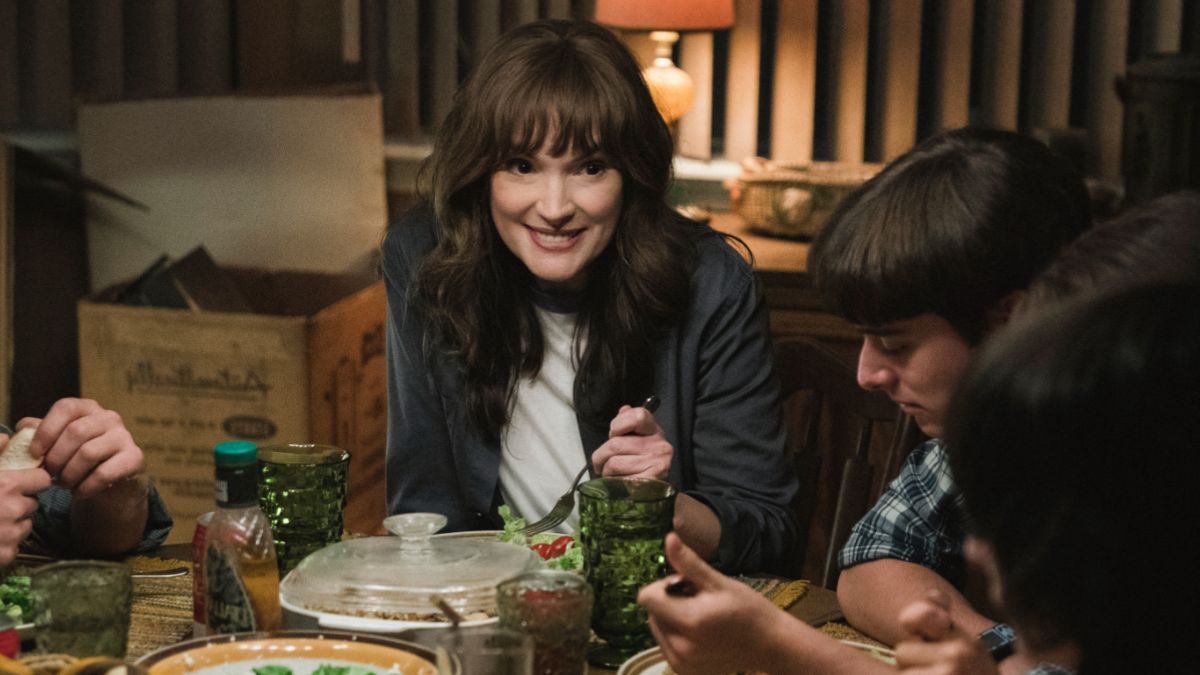
The final moment that made Joyce the closer
In the closing stretch of the finale, Vecna is already collapsing, and Joyce steps in to end it. In Netflix’s interview coverage, Joyce delivers a final line, then repeatedly strikes Vecna with an ax until the fight is definitively over.
It is a jolt partly because the show could have chosen almost anyone. Eleven is the face of the series. Hopper is the bruiser. Steve is the fan-favourite warrior. But the scene makes a different argument: the person who finishes the story is the person who started it, emotionally, back in Season 1.
The Duffer Brothers’ core reason: Joyce was first to believe, first to act
Ross Duffer says the writers spent time debating who should “deal the final blow,” and they “really went through everyone.”
The conclusion, in their words, was that it had to be Joyce because she was the first character in Season 1 to take action and truly believe something unnatural was happening in Hawkins. Ross also frames Joyce’s love for Will, her family, and the people around her as a kind of superpower that fits the show’s theme.
That explanation matters because it grounds the choice in the show’s actual DNA. Stranger Things is not really about who has the biggest powers. It is about who refuses to give up when the world tells them to stop.
The ax is not just a prop, it is a long payoff
The other big reason the Duffers give is much more practical and honestly more satisfying: the ax has been part of Joyce’s “Hawkins survival kit” since early on, but she never got the clean payoff of using it to actually kill a monster.
Ross Duffer points out that Joyce uses the ax earlier, but she is essentially swiping at threats, not ending them. The finale makes the ax a symbol of completion, a visual that says Joyce has been ready for this fight for years, and now the story is finally letting her finish it.
It is also why the moment lands as “full circle.” The series began with Joyce refusing to accept a normal explanation for Will’s disappearance. Ending with Joyce refusing to let the town’s biggest evil survive is a neat mirror.
Why Joyce being the one to do it fits the emotional logic of the show
A lot of finales choose the character with the cleanest “power” logic. Stranger Things often chooses the character with the cleanest “heart” logic.
Joyce is the show’s original alarm bell. She is the first person who looks unreasonable to everyone else, and then turns out to be right. She is also the character who repeatedly pays the emotional cost of the Upside Down without ever getting to be the hero on the poster. That is why giving her the final blow reads less like fan service and more like the story finally paying its debt.
Even Noah Schnapp, who appears in the scene, said he found it fitting and “very reminiscent of Season 1,” calling it a full circle.
What Winona Ryder said about filming it
Ryder describes the scene as something you cannot really rehearse, and she recalls only doing it a couple of times. She also notes the contrast between the brutality of the moment and the fact that her scene partner, Jamie Campbell Bower, is extremely kind off-camera.
Those details are small, but they help explain why the scene plays the way it does. It is not choreographed like a slick action beat. It feels like a person snapping into pure protection mode, which is basically Joyce’s entire arc distilled into 30 seconds.
Conclusion
The Duffers’ explanation is straightforward: Joyce gets the final blow because she is the emotional engine of the story, the first believer, and the person whose love has consistently beaten “logic” in Hawkins. The ax payoff just makes it cleaner, and Winona Ryder’s performance makes it feel earned instead of staged.