The creator of Black Mirror, Charlie Brooker, has opened up about the stark and unsettling ending of the season 7 premiere episode “Common People,” which stars Rashida Jones and Chris O’Dowd and has been widely described as one of the series’ bleakest entries. Brooker told Entertainment Weekly that the way the story concludes is intentionally “particularly chilling” and emblematic of Black Mirror’s core themes.
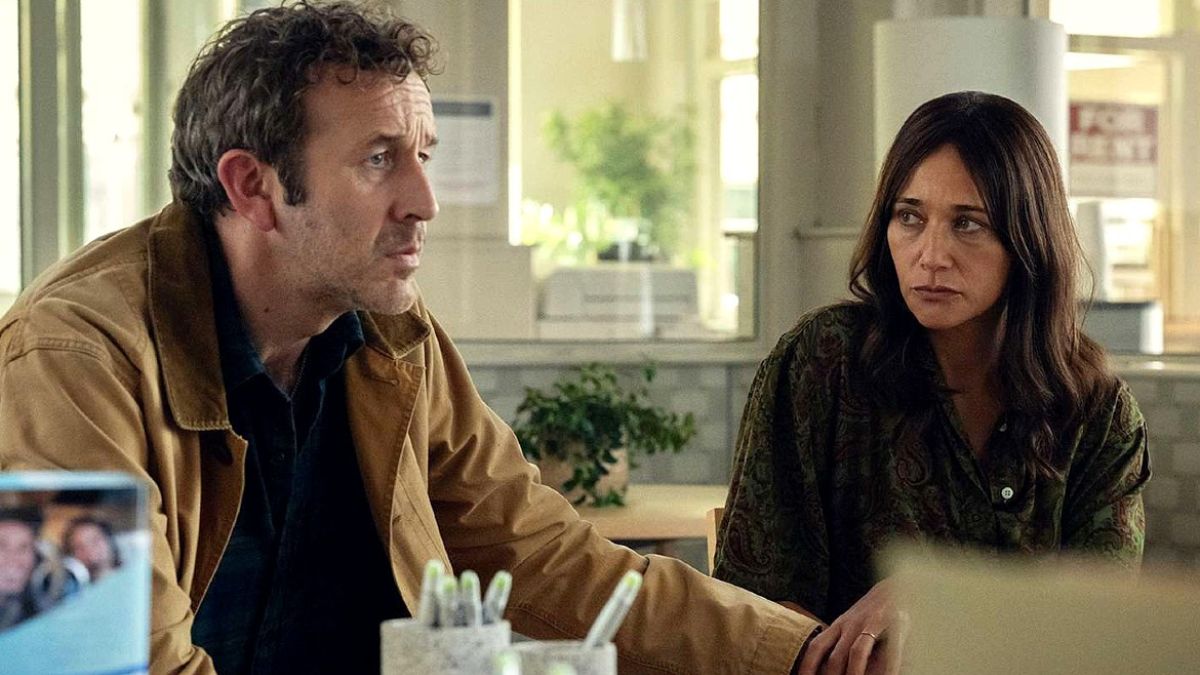
“Common People” starts off feeling deceptively grounded and even light, focusing on working-class couple Amanda (Jones) and Mike (O’Dowd), who are living modest, contented lives. But when Amanda suddenly collapses and is diagnosed with a deadly brain tumour, Mike turns to an experimental tech company called Rivermind that promises to preserve her consciousness with a controversial new procedure.
As the couple’s life becomes consumed by escalating subscription costs and degrading circumstances, Rivermind’s influence grows darker: Amanda begins to behave in ways that are not entirely her own, including reciting advertisements without awareness. “We’ve established that she’s not aware when she’s running ads,” Brooker explained, highlighting how technology in the episode strips away agency as much as it claims to save it.
The turning point — and the heart of the episode’s chilling twist — comes when Amanda, suffering the consequences of her condition and the invasive tech, tells Mike to end her life “while I’m not here,” meaning while she’s performing the ad-reciting version of herself. Brooker said this moment feels “so Black Mirror” because it blends tragedy with a perverse form of corporate control — Amanda’s death becomes indistinguishable from her own manipulated performance.
In the final scene, Mike carries out her request, and the camera lingers on him preparing to enter a room where he has previously done degrading livestream work to pay the bills — leaving viewers with a stark, ambiguous image that suggests he may be trapped in a cycle of despair. Brooker described this choice to have Mike look directly into the camera before the scene cuts to black as what makes the ending “particularly chilling as endings go.”
Brooker acknowledged that there are multiple ways to interpret the ending, but for him, there’s a sense of no way out, a grim conclusion that resonates long after the episode ends. It’s a narrative twist that transforms a seemingly earnest story about love, loyalty, and economic struggle into a meditation on how far people will go when faced with unimaginable loss and relentless systems they can’t control.
“Common People” also includes subtle callbacks to earlier Black Mirror lore, such as a nod to San Junipero, threading thematic continuity through the anthology. Despite its relatively simple setup compared with more overtly sci-fi entries, the episode’s ending leaves viewers confronting the dark edges of dependency, both technological and emotional, a hallmark of the series.
The full seventh season of Black Mirror, including “Common People,” is streaming now on Netflix.