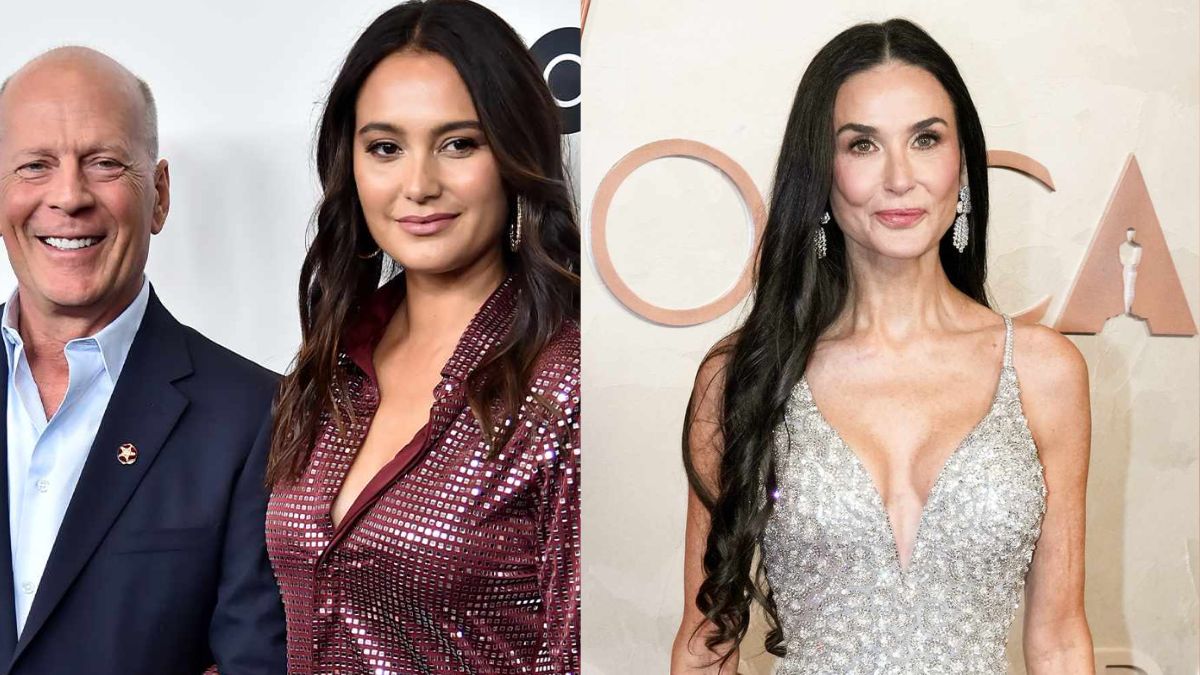
Emma Heming Willis is publicly thanking Demi Moore for what she called the “beautiful” support Moore offered while discussing Bruce Willis’ frontotemporal dementia (FTD) and the realities of caregiving in a high-pressure, highly visible situation.
The exchange was prompted by Moore’s remarks on The Oprah Podcast, where the actor—Willis’ ex-wife and the mother of his three oldest daughters—spoke sympathetically about the weight that falls on Heming Willis as Bruce’s primary care partner. Moore praised Emma’s steadiness and compassion, while acknowledging how emotionally and logistically complex the situation is.
Heming Willis responded by sharing appreciation for Moore’s comments and aligning with the broader message of staying grounded in the present—finding what’s still good and meaningful even as the illness changes day-to-day life.
Why the moment mattered
This wasn’t just a friendly celebrity comment exchange. Heming Willis has recently been pulled into public debate after discussing that she and Bruce are currently living in separate homes to support the round-the-clock professional care team he needs.
She has emphasized that this kind of decision is complicated, personal, and often misunderstood by outsiders who haven’t lived through similar caregiving demands.
Moore’s support landed as a counterweight to that criticism—an affirmation from someone uniquely close to the situation and deeply invested in Bruce’s wellbeing and the family’s stability.
A blended family that’s stayed unusually united
Moore and Willis divorced years ago, but multiple profiles and timelines have documented how they maintained a cooperative, close relationship while co-parenting and navigating major family milestones—including Moore and Heming Willis appearing together at family gatherings.
That unity has become even more visible since Willis’ health challenges went public. Coverage repeatedly notes that Moore, Heming Willis, and their children have continued to show up together, framing the situation as a shared family responsibility rather than a divided “ex vs. current spouse” story.
The health context: aphasia, then a more specific diagnosis
Bruce Willis’ family first announced in 2022 that he would step away from acting following an aphasia diagnosis. In February 2023, the family shared that his condition had progressed and doctors had identified a more specific diagnosis: frontotemporal dementia.
FTD is a form of dementia that can affect communication, behavior, personality, and executive function, and it progresses differently from person to person. Medical references describe language difficulty as a common feature in some forms of FTD, alongside potential behavioral or emotional changes.
Emma Heming Willis’s larger message: caregiving is bigger than gossip
Heming Willis has increasingly used her platform to talk about caregiving more broadly—what families need after a diagnosis, how isolating it can be, and how quickly people judge choices they don’t understand. In longer-form interviews, she has described trying to live with grief and love at the same time, and has positioned her public advocacy as larger than celebrity storytelling.
She has also been working on a caregiver-focused book aimed at helping others who feel unprepared when dementia enters their lives—an effort reported as part memoir, part resource, with an emphasis on practical support from the earliest stages of diagnosis.
What the “beautiful” support signals
The subtext of Moore’s comments—and Heming Willis’ gratitude—is straightforward: this isn’t a story about Hollywood drama. It’s a story about how a family is trying to care for someone with a progressive neurodegenerative condition, while keeping dignity intact and shielding their children from unnecessary noise.
In that context, Heming Willis’ response reads less like a headline-ready clapback and more like a reminder of what matters: support, presence, and humility about what caregiving actually looks like behind closed doors.