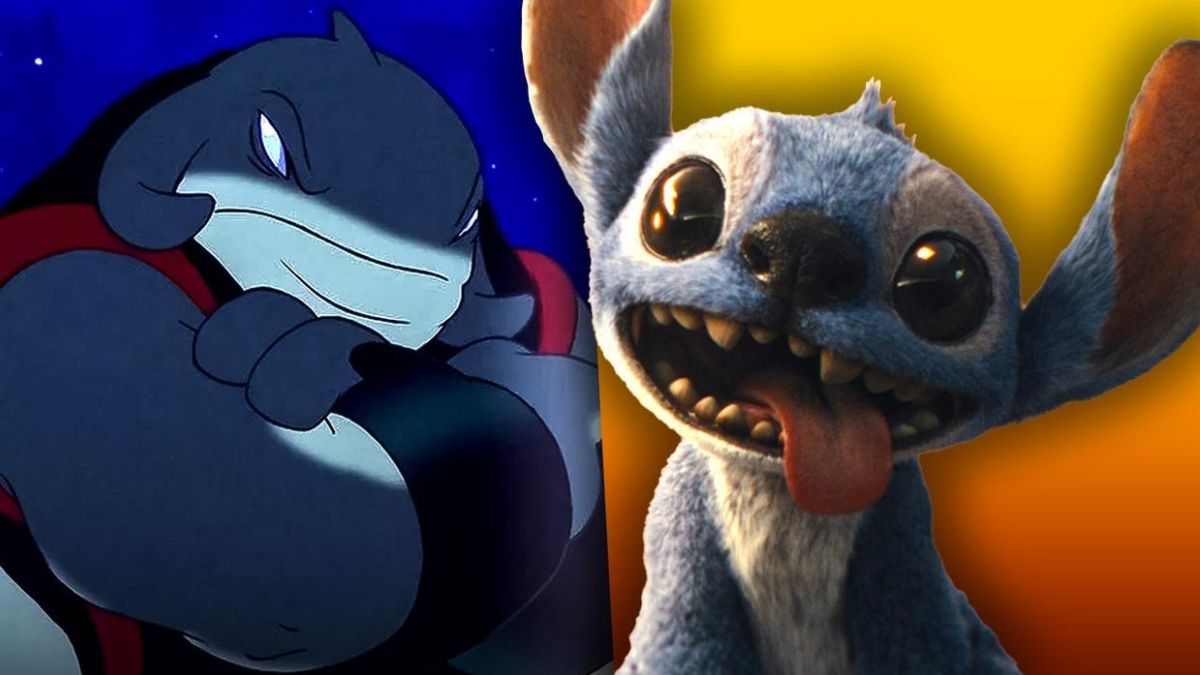
When Disney’s live-action Lilo & Stitch hit theaters, longtime fans quickly noticed a major omission: Captain Gantu, the towering Galactic Federation enforcer who becomes the animated film’s late-game “big bad,” is nowhere in the remake.
Instead, the new version rebuilds its final act around a different antagonist—and that single swap affects tone, pacing, and even which themes the movie chooses to underscore.
What changed from the 2002 film
In the 2002 animated movie, the story escalates when Gantu arrives and physically overpowers Stitch, driving a bigger, more action-packed climax.
The live-action version keeps the core set-up—Lilo and Nani’s fragile family situation, Stitch arriving like a major disruptor—but revises the endgame so that Jumba (played by Zach Galifianakis) becomes the primary threat in the third act. In this version, it’s Jumba—not Gantu—who captures Lilo and Stitch, setting up Stitch’s rescue attempt and the finale’s emotional beats.
That’s not a small edit. It’s a structural change that rewires how the movie builds tension.
The filmmakers’ stated reason: live-action “grounding” and emotional focus
Director Dean Fleischer Camp has explained the decision in blunt terms: the team tried exploring Gantu, but concluded the character simply didn’t translate well to live-action.
More importantly, Camp framed the cut as a trade-off. Live-action, by default, feels more “real,” and the remake leans harder into the terrestrial drama—Lilo and Nani’s grief, the threat of separation, and the pressure on a young caregiver.
Camp’s argument is that if you want that emotional storyline to land with more weight, you need “breathing room” in the movie. Removing a large, effects-heavy villain helps create that space.
Producer Jonathan Eirich also confirmed that Gantu was present in early drafts, but the director pushed back on the assumption that the remake had to follow every animated beat. The guiding question became: Does the climax need a villain with a personal connection to Stitch? Their answer was yes—hence the pivot to Jumba.
How the decision shaped the movie
1) The third act becomes more personal, less “final showdown.”
Camp’s critique of the original structure is that once Gantu arrives, the film shifts into a more conventional “final villain” shape. The remake avoids that by making the antagonist someone already embedded in Stitch’s origin story. The result is a climax built around betrayal and responsibility rather than “new monster enters, lasers begin.”
2) It reinforces the remake’s theme: family under real-world pressure.
Camp has pointed out that putting a real child in heightened risk changes what filmmakers can responsibly “get away with” emotionally. By stripping away some of the broad sci-fi escalation, the film keeps attention on the human stakes—especially the fear of Lilo being separated from Nani.
3) It nudges other realism-driven changes into place.
Once the movie commits to “credible” real-world stakes, it also adjusts the support system around Lilo and Nani. Entertainment Weekly reports that the remake splits Cobra Bubbles’ animated hybrid role into a CIA agent (still Cobra Bubbles) and a separate social worker character (Mrs Kekoa), because the live-action version needs a more believable person to carry the child-welfare storyline.
And that realism push doesn’t stop there: broader story choices—like the remake’s debated ending—also reflect the same “modernized, grounded consequences” approach, even when it divides fans.
Fan reaction and the debate it sparked
Cuts like Gantu are flashpoints because they don’t just remove a character—they remove a feeling: the animated film’s late surge into big, pulpy sci-fi spectacle. Some viewers see the remake’s choice as smart storytelling economy; others see it as Disney sanding down what made the original pop.
What is clear from the filmmakers’ own explanations is that this wasn’t presented as a random deletion. It was a deliberate decision tied to tone: deepen the sister story, keep the emotional spine front and center, and avoid a climax that pulls focus away from the “ohana” core.
Captain Gantu was cut because the creative team believed he didn’t work in live-action and because removing him let the film spend more time where it wanted the audience’s attention: Lilo and Nani’s bond, the fear of losing family, and Stitch’s arc being tested by someone directly tied to his creation.
That single change reshaped the third act, altered the movie’s balance of action vs. emotion, and pushed the remake toward a more grounded interpretation of what “ohana” looks like under pressure.